Join War on the Rocks and gain access to content trusted by policymakers, military leaders, and strategic thinkers worldwide.


The extent of China’s drone dominance — and how to decouple from it — has long been a source of debate and anxiety in Washington. Last month, the Wall Street Journal reignited controversy by publishing a visual analysis of military quadcopter components, exploring China’s advantages in parts manufacturing and cost. The director of the Defense Innovation Unit objected to the report, stating on X that “By leaving out the dozens of U.S. companies that have plunged into drone component manufacturing, this article disappoints.”
Underlying this debate is disagreement about how to measure drone supply chain security. At the very top of certifications is the Defense Contract Management Agency’s “Blue List,” a list of 67 whole, ready-to-fly drones whose supply chain security the government has verified. But there are hundreds of both American and partner-nation companies that, while not on this list, sell into the U.S. government market. Next is the “Blue UAS Framework,” a catalog of 135 companies selling individual or modular drone parts, whose supply chain security is also government-approved. Then there’s the National Defense Authorization Act compliance frameworks, a list of criteria that companies must meet to become approved suppliers, though compliance is self-reported. Finally, third-party independent evaluators such as the Association for Uncrewed Vehicle Systems have worked with government entities such as the Defense Innovation Unit to certify companies’ compliance with the National Defense Authorization Act through their Green List.
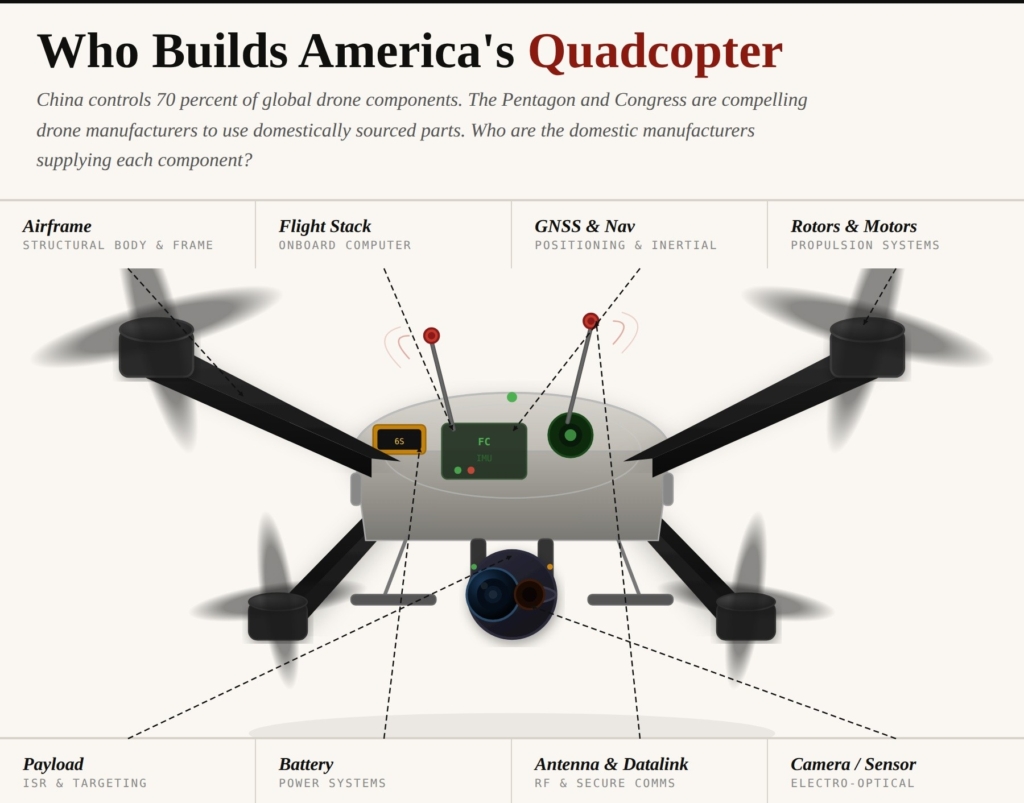
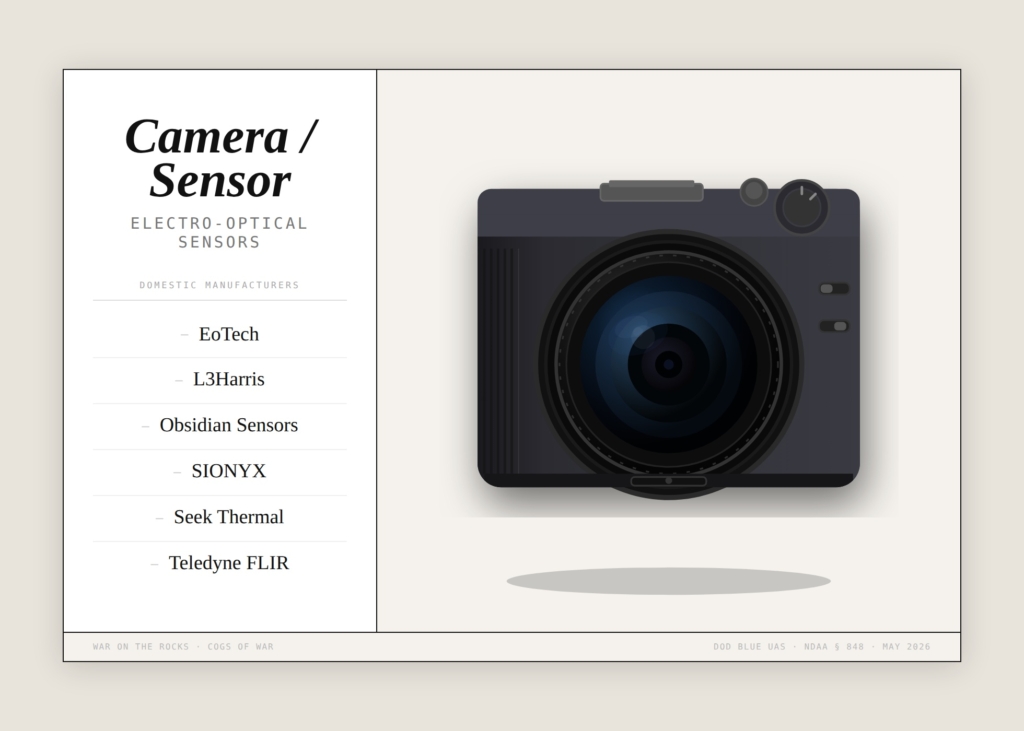
Our infographic shows that there is a broader U.S. drone-component ecosystem than some readers may realize, but that the system is uneven and difficult to measure.
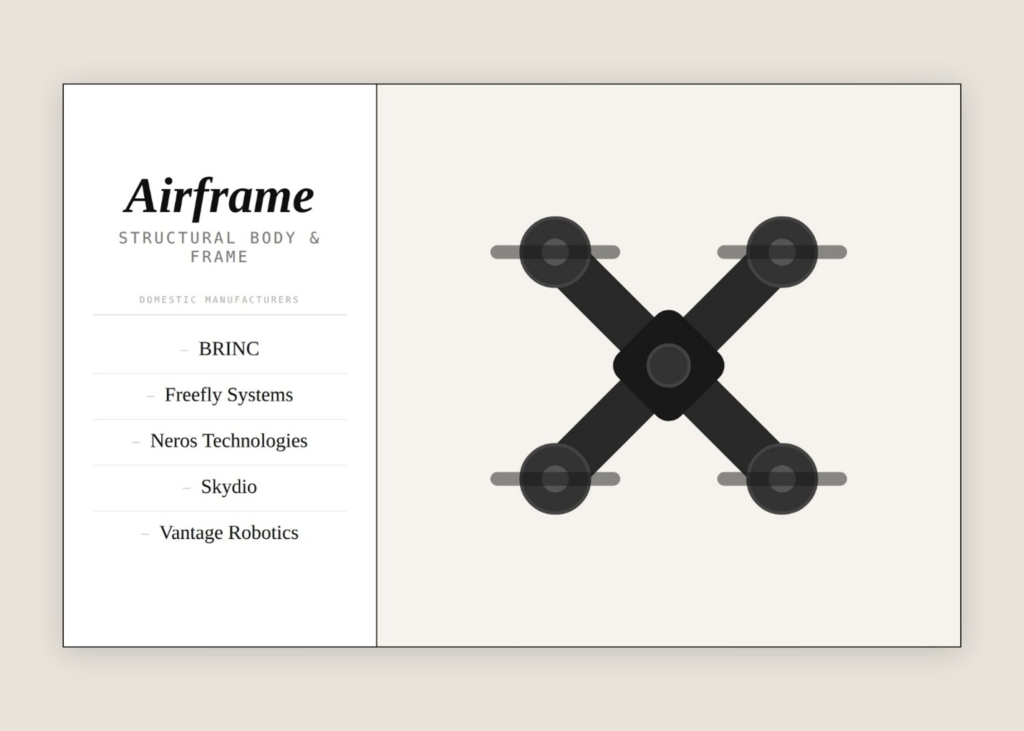
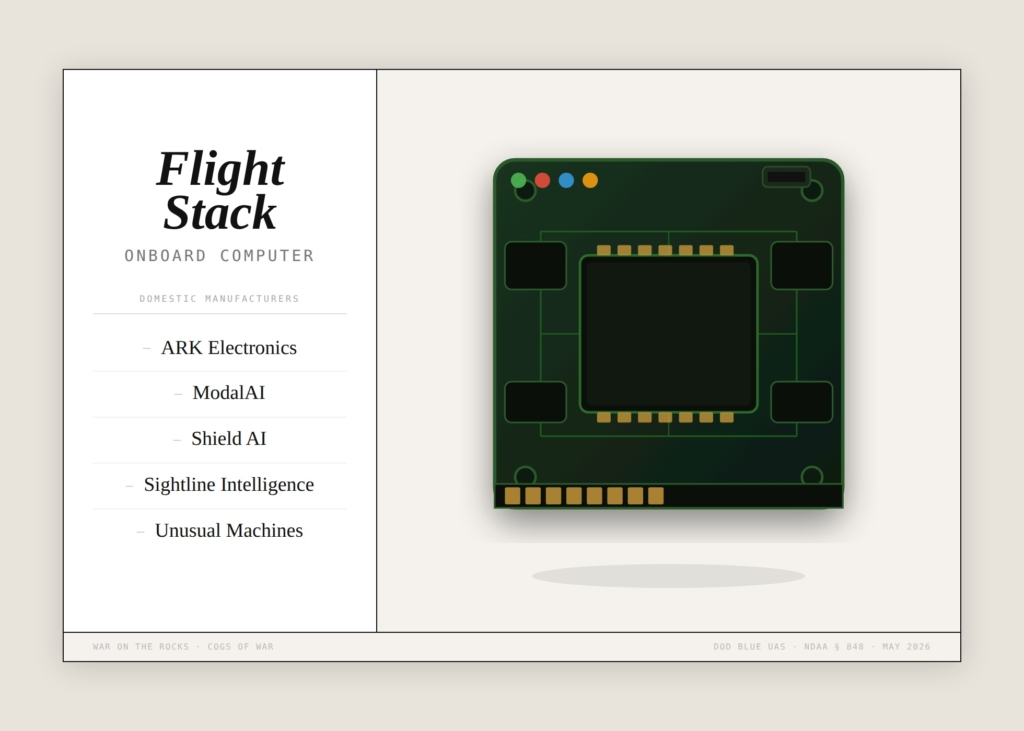
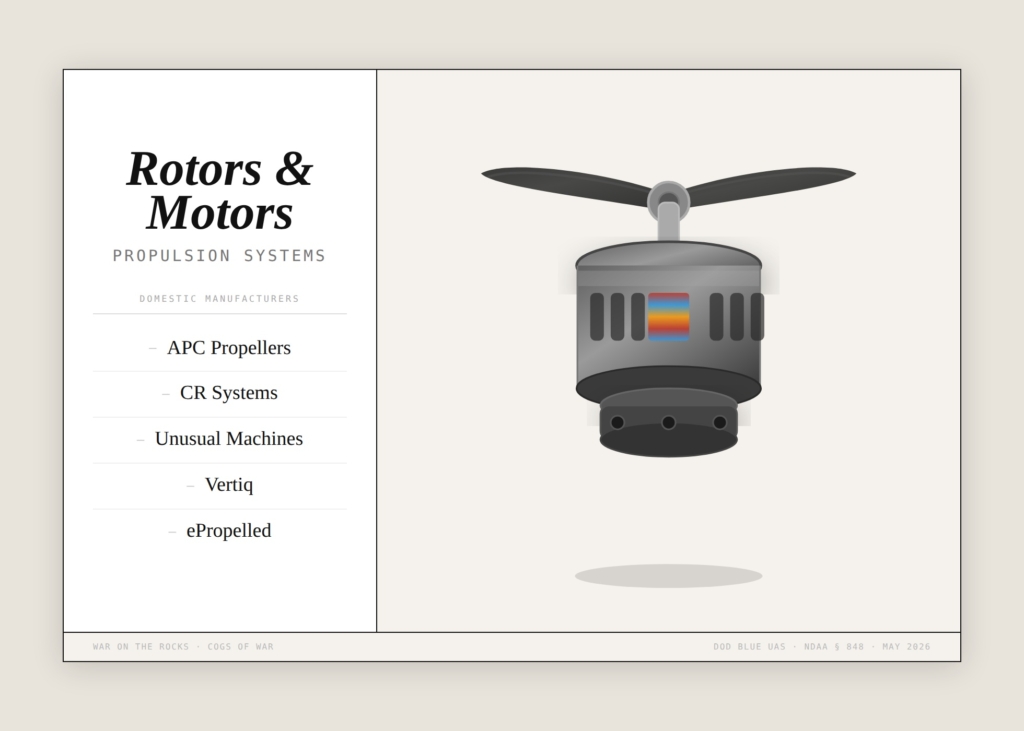
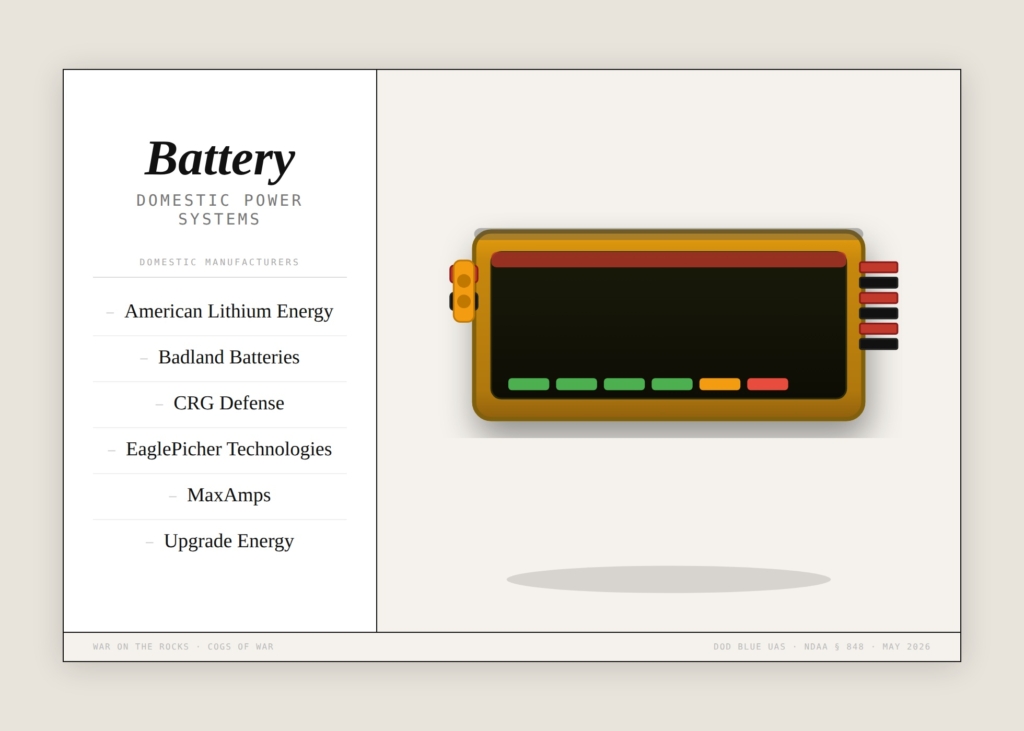
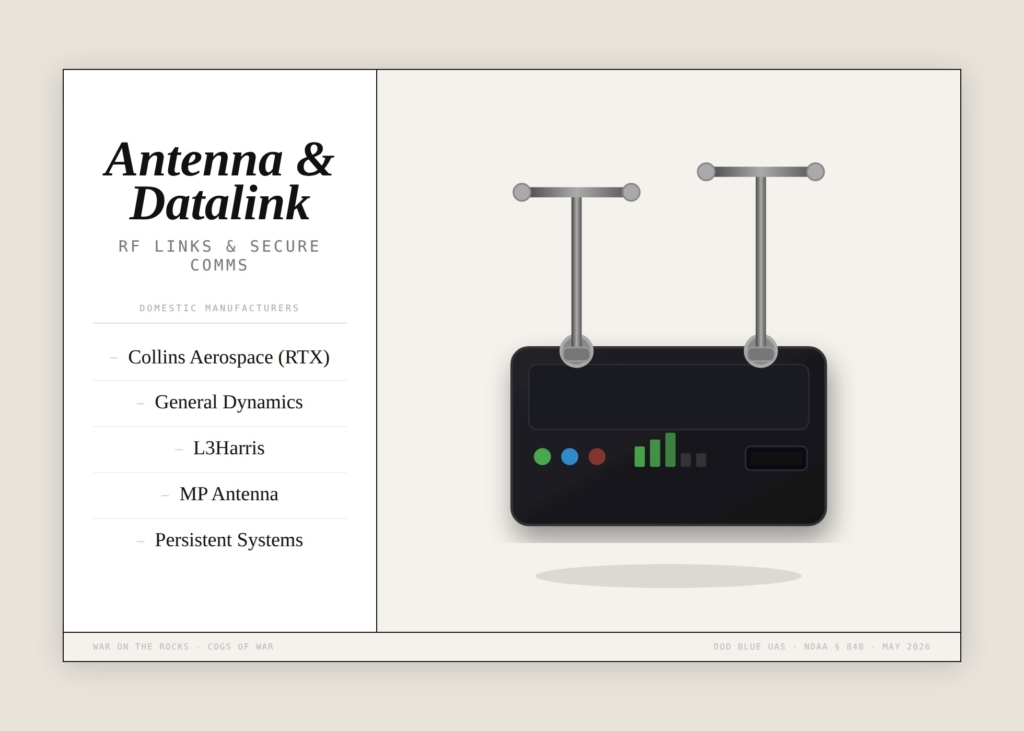
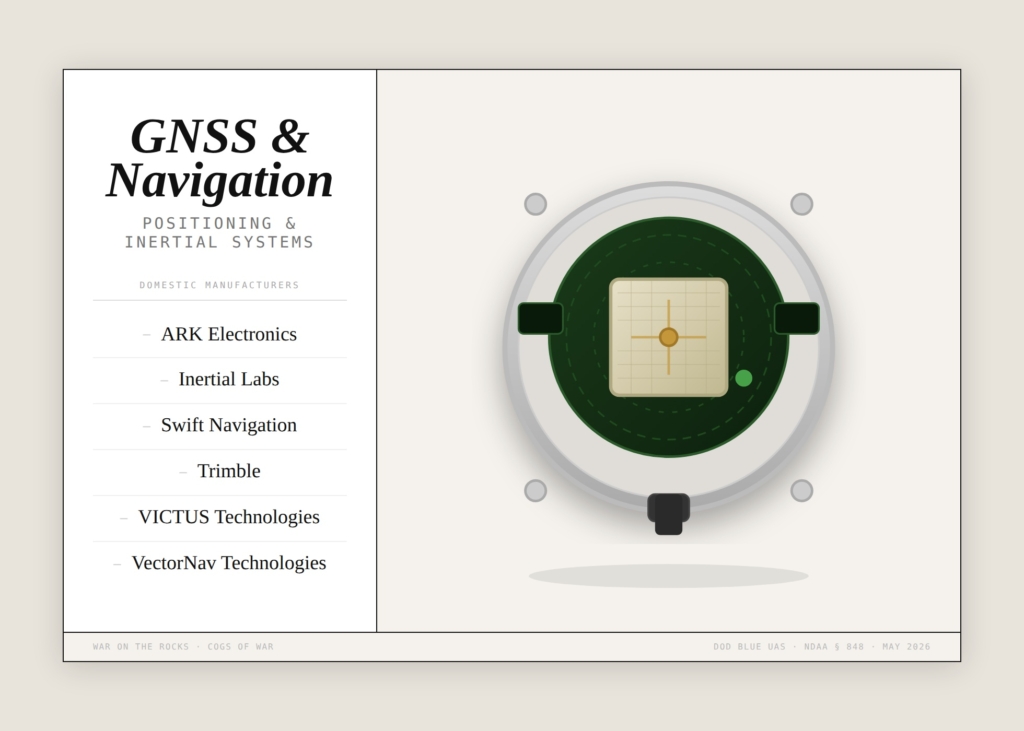
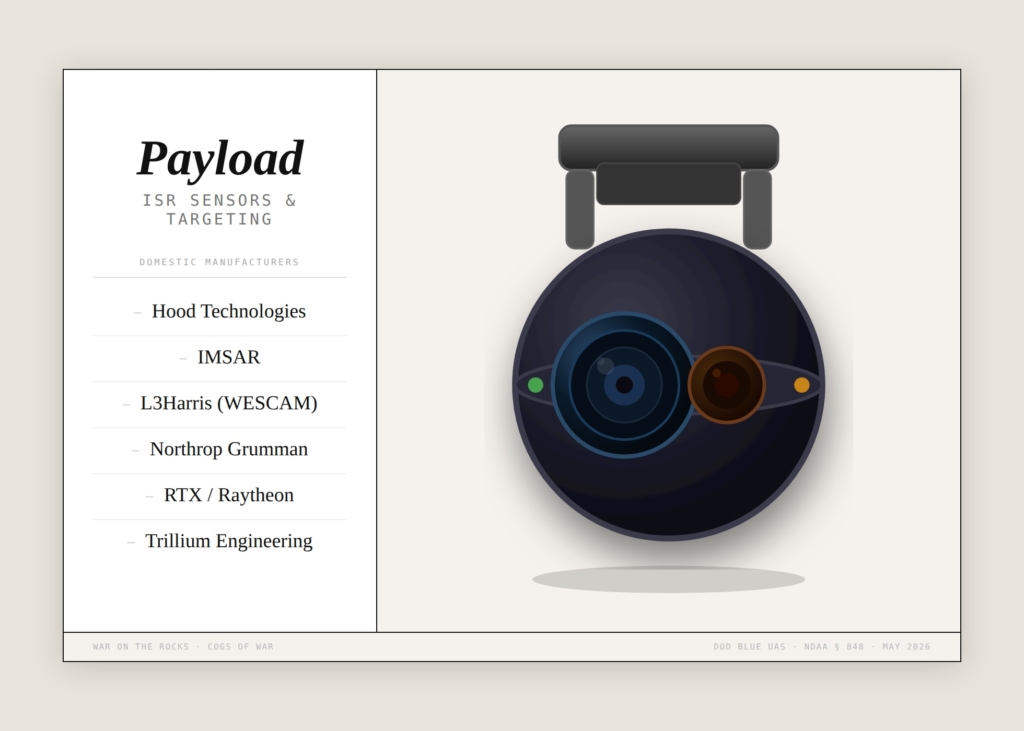
We have broken down a typical quadcopter drone into eight broad component categories: airframe, datalink, payload, flight stack, battery, camera, rotors and motors, and navigation systems. Each card displays a few representative American-domiciled manufacturers with domestic supply chains and large Defense Department contract sizes in the category, while the caption indicates our rough count of the total players in that space.
A note on our methods: We compiled a list of American-domiciled companies claiming National Defense Authorization Act compliance, as well as those on the Blue List and the Association for Uncrewed Vehicle Systems International Green List. Notably, our list is narrower than other industry counts, as we exclude companies domiciled outside the United States that claim National Defense Authorization Act compliance. We sorted our list into the above eight component categories. The categories themselves have been simplified here for illustrative purposes. Companies that produce projects across more than one category are included in each.
The totals for each component area are approximate, as compliance is self-reported and the market is changing quickly, with both new entrants and acquisitions. Each card also highlights some notable players in each component category. Since there are more companies operating in the space than we could include on our cards, we asked operators and industry experts for specific companies to highlight based on industry prominence.