Join War on the Rocks and gain access to content trusted by policymakers, military leaders, and strategic thinkers worldwide.

Welcome to The Ukraine Compass, a weekly digest of Ukrainian commentary from across the political spectrum.
Every Monday, War on the Rocks members get a curated selection of op-eds and editorials from Ukrainian-language media to understand how Ukrainians themselves debate the biggest issues shaping their country. Western coverage of Ukraine often narrows to the battlefield; these pieces widen the view to daily life, politics, and public argument in a nation at war.
A typical edition provides roughly a dozen pieces sorted into five categories: Frontline and Strategy, Allies and Diplomacy, Domestic Politics, Economy, and Society and Culture — closing with detailed Editor’s Notes on the patterns we’re seeing and the questions that linger.
This week, we’re shaking it up. A government reshuffle has become a full political crisis, sparking protests in Kyiv and outrage online, so this free special edition sets the usual categories aside to focus entirely on one story: the surprise dismissal of Defense Minister Mykhailo Fedorov.
If this is the kind of insight you want in your inbox every week, become a War on the Rocks member and never miss an edition.
Mykhailo Fedorov, Ukraine’s youngest-ever Minister of Defense, was abruptly dismissed in July 2026, just six months into the job, as part of a Cabinet reshuffle under incoming Prime Minister Serhii Koretskyi. He’s credited with making drone warfare Ukraine’s most lethal capability through rapid innovation, “gamifying” unmanned systems, and deepening international defense ties. In his farewell address, he cited bureaucracy, loyalty-based resource distribution, and a conflict with Commander-in-Chief Oleksandr Syrskyi, who, he says, blocked reforms, forcing him out.
Fedorov’s core strategy was rapid tech iteration over mass mobilization, updating drones and autonomous battlefield software every few months to outpace Russia. With him gone, analysts worry successor, Ihor Klymenko, may lack the same instinct for backing unconventional solutions.
The dismissal raises questions about accountability and wartime leadership. Whether it reflects a genuine command dispute, a fight over Ukraine’s €70 billion in 2026 NATO aid, or reasons known only to Zelensky, the fallout will shape how allies and Ukrainians judge Kyiv’s wartime governance.
Fedorov’s Own Words
Новий час — Novyi chas (“The New Voice of Ukraine”)
Popular Ukrainian news site with a strong reputation for accuracy
“I Didn’t Give in to Syrskyi’s Ultimatum. I Can’t Stay Silent.”
By Mykhailo Fedorov/July 16, 2026
Fedorov reflects on his tenure in Zelensky’s government since 2019 and his defense work since 2022. He credits himself with launching United24, sea and long-range drones, the Delta system, e-points, the Unmanned Systems Forces, interceptor drone programs, and disabling Starlink for Russian forces. He cites many unresolved problems for Ukraine’s defense industry: weak corps structures, constant commander turnover, no accountability, loyalty-based resource distribution, and bureaucratic blocking of reforms. He describes an escalating conflict with Commander-in-Chief Syrskyi, who allegedly blocked initiatives and issued an ultimatum: lay low and stop the massive reforms or leave. Fedorov refused the advisory role Zelensky offered him, insisting real change is needed to defeat Russia asymmetrically through technology rather than manpower alone, holding dear the strategy he’s worked so hard to implement during his time as Minister of Defense.
“The Minister of Defense is the president’s appointment to make. But today, it isn’t Fedorov personally that the Ukrainian people came out for; they came out for themselves. Because we had seized the initiative on the battlefield and in the sky, and now that trajectory is breaking, and we’re turning away from it. That’s the real risk, and that’s what people came out for. So this isn’t about me at all. Today we’re talking about the root of the problem. I don’t need to hold the position of Minister of Defense for its own sake. I need this position in order to win the war.”
Decision Skeptics
Українська правда — Ukrainska Pravda (“Ukrainian Truth”)
Highly influential centrist-liberal outlet with a strongly pro-reform voice
By Olena Trehub/July 16, 2026
Olena Trehub, Executive Director of the Independent Anti-Corruption Commission, warns that replacing Fedorov risks paralyzing key institutional reforms (competitive procurement, DOT-Chain Defence, Drone Deal partnerships, FREYJA missile defense, and 2027 funding plans) amid public protests and E.U. concern voiced by Commissioner Kubilius. While the likely incoming Klymenko brings a strong administrative and mobilization track record from the Interior Ministry, she cites unclear official reasoning behind the change, pointing instead to Fedorov’s conflict with Syrskyi and mounting mobilization pressures. The author argues Ukraine’s mobilization crisis is fundamentally a trust problem, and replacing a reform-minded, publicly trusted minister with an untrusted appointee may deepen rather than solve it.
“The European Union has stressed its close cooperation with Fedorov’s team, which helped drive significant progress in developing long-range strike capabilities and scaling up defense production. According to Kubilius, this replacement will inevitably raise questions within the European Union, given the effective cooperation already established between the two sides on the transparent use of European financing.”
***
Цензор.НЕТ — Cenzor.NET
News and opinion site with a strong pro-defense, typically conservative voice
“Fedorov’s Dismissal and the Rollback of His Reforms Could Lead to Ukraine’s Defeat”
By Yevhen Kuzmenko/July 16, 2026
Member of Parliament Mykyta Poturaev announced his resignation in protest over Fedorov’s ouster, explaining to Censor.NET that his concern isn’t personal loyalty, but fear that reforms Fedorov initiated at the Ministry of Defense will be rolled back, risking defeat in the war. He cited Fedorov’s claims of persecution against reform-minded officers by military leadership. Poturaev said he acted to draw public attention to the issue, received no direct pushback from the President’s Office, and doesn’t expect a call from Zelensky. His resignation still requires a parliamentary vote, likely no earlier than August.
“Moreover, as Mykhailo Fedorov said in his report today, this confrontation unfortunately showed up not only in the blocking of Ministry of Defense reforms and the army’s failure to reform, but also in the persecution of officers who supported and implemented the best practices the ministry proposed. They started fighting in new ways and achieved successes we’re all aware of. It’s a shame we don’t always know which officers were behind them. That may have been a mistake on Mykhailo Fedorov’s part—but we’re at war, and you have to constantly ask yourself how what you say will affect the state of society. Will it help stability, or the opposite? We don’t know the answer.”
Decision Defenders
Обозреватель — Obozrevatel (“Observer”)
Major Ukrainian outlet that sits center-right in its editorial voice
“Solving a Critical Issue: Klymenko Can Bring Order to Mobilization and Recruitment”
By Denys Prokopenko/July 16, 2026
This short piece from the commander of Ukraine’s 1st Azov Battalion thanks Fedorov for strengthening Ukraine’s defense capability during his tenure and praises his consistent state-oriented approach. He, however, endorses incoming Defense Minister Ihor Klymenko, citing his attentiveness to frontline issues, work on the corps-system transition, support for National Guard personnel, and mobilization/recruitment experience. The author pushes back on critics who dismiss Kylmenko’s “Soviet-style” discipline, saying it will likely be a positive for the troops.
“As for the future Minister of Defense, I’ll say this: as Minister of Internal Affairs, Ihor Klymenko devoted considerable time and attention to frontline issues—both within the Ministry of Internal Affairs and on purely military matters. In particular, he actively worked on transitioning the army to a corps system. He consistently defends the interests of National Guard servicemen and pays close attention to properly supplying National Guard units, and I believe this same approach will now extend to soldiers across all structures defending Ukraine on the front line.”
***
Новий час — Novyi chas (“The New Voice of Ukraine”)
Popular Ukrainian news site with a strong reputation for accuracy
“Dramatic Misunderstanding of the Situation”
By Vitaliy Portnikov /July 16, 2026
This is a critical opinion piece responding to Fedorov’s farewell speech. The author argues Fedorov’s complaints about small things like anonymous Telegram channels harassing him reveal either a misunderstanding or willful blindness, since he himself failed to prevent this ecosystem while in his government capacity. The author acknowledges Fedorov’s reform achievements but calls him politically inexperienced, unaware that structural change is impossible without deeper reform. The real problem, the author argues, is Ukraine’s arbitrary system of appointing/removing ministers by loyalty rather than parliamentary process, leaving the public naively drawn to one-off, young and bright “saviors” instead of demanding structural accountability.
“I won’t question Fedorov’s reform plans and achievements at the Ministry of Defense. What I see before me, though, is someone young and inexperienced in political processes, who even now fails to realize that without structural change, there can be no real transformation. This might be dismissed as the former minister’s personal blind spot—if it weren’t also the position of those now rushing to defend him, none of whom ask the obvious question: why are governments formed this way, why are ministers appointed and dismissed this way, and why does being a successful minister come down to little more than a lottery ticket?”
Systematic Blame
Газета— Gazeta (“Newspaper”)
Mainstream Ukrainian socio-political news outlet with a pro-Ukraine editorial voice
“More Cases to Come? Fedorov Loses to Syrskyi, Steps Down”
By Boryslav Bereza/July 16, 2026
Boryslav Bereza notes a firing pattern he’s noticed since Zelensky took office, and especially since the full-scale invasion started: Once someone falls out of favor with Zelensky’s inner circle, criminal cases against them mysteriously surface. In that vain, he predicts investigations into Fedorov’s associates will emerge. He warns the public that this latest government reshuffle will cause the familiar pattern of setting Ukraine back after months of real progress.
“Soon, several journalistic investigations into Fedorov’s inner circle will be published, and in time it will become clear that there are legal cases involved as well. Many people won’t like what surfaces today. We’ll discuss it properly once it’s out and once you see what the relevant authorities are doing and why. It’s worth noting, too, that as long as someone stays close to Zelensky, their affairs tend to stay quiet. So what does that tell you? I can only imagine how nervous Konotop must be right now. But again, we shouldn’t expect anything positive from this Cabinet reshuffle. So don’t build up illusions for yourself, just to be disappointed later.”
***
Високий Замок — Vysoky Zamok (“High Castle”)
Daily socio-political news outlet with a strong nationalistic voice
By Natalia Balyuk/July 16, 2026
Natalia Balyuk argues Fedorov’s removal stems not from popularity or effectiveness, as most people claim, but from his refusal to participate in corruption schemes. She cites his reported unwillingness to be part of these dealings as making him an alien within Zelensky’s team. The timing, right after NATO’s Ankara summit pledged €70 billion in 2026 military aid, suggests a “corporate war” over controlling these funds, requiring his removal, she believes. The author frames this alongside past controversies (Zaluzhny’s dismissal, Poroshenko sanctions, Yermak’s influence) as evidence of prioritizing personal ambition over wartime defense needs.
“Just imagine the opportunities that opens up for those funds, and there’s no way to get a piece of them without controlling the Ministry of Defense. Shortly before his resignation, Fedorov gave an interview in which he explained that he had audited defense contracts, shifted procurement to open tenders, and shut down the corruption schemes the Ministry had been notorious for under every previous minister, making clear he wouldn’t take part in any such schemes. What we’re witnessing now is nothing short of a shameless scramble to redistribute that money.”
***
Еспресо — Espreso
24-hour television channel and digital outlet with a pro-European outlook
“Fedorov Wasn’t the Only Thing Zelensky Took From You, and You All Helped Make It Happen”
By Serhiy Marchenko/July 16, 2026
This op-ed blames public complicity for enabling Zelensky’s pattern of prioritizing political optics over strategic substance, now culminating in Fedorov’s ouster. It recalls the public’s approval of Zelensky’s combative Oval Office clash with Trump (which cost Ukraine intelligence-sharing and led to a mineral rights deal), his mockery of Orban (who later blocked E.U. aid), and cheers over Zaluzhny’s dismissal, Mindich, and other controversies. The author argues that by repeatedly celebrating these “strongman” moments and forgiving other scandals, the public emboldened Zelensky to make unilateral decisions based on personal political interest rather than the country’s defense needs.
“You were cheering along, people. You loved it. Zelensky’s ratings soared sky-high after Zaluzhny’s dismissal and the setbacks at the front! You loved your president so much that you were ready to forgive him for the retreats, for Mindich, for everything. Because it felt powerful…Actually, precisely because you liked it all, Zelensky was able to afford what you are all protesting against now — a single decision to weaken the country’s defense capability based on his personal political interests.”
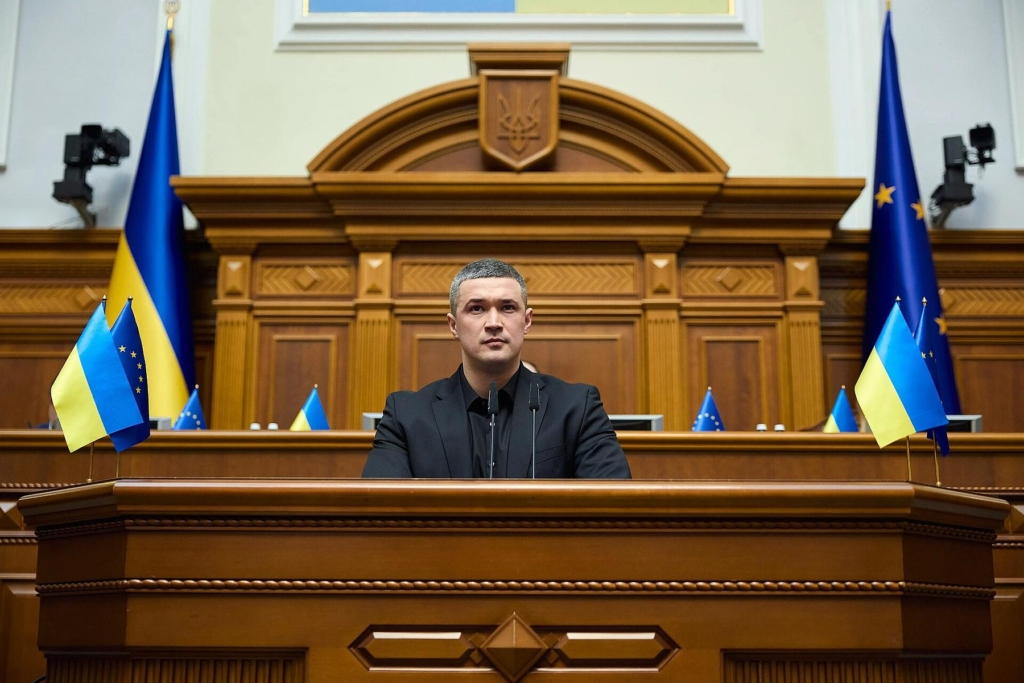
To understand the situation of Fedorov’s removal and the subsequent protests and online hysteria that ensued, we should understand how three key elements play a role in Ukrainian life, especially since 2022: trust, technology, and turnover. Let’s unpack it.
As a nation at war, Ukrainians often write about trust. Which international partners can Ukraine trust to deliver on aid promises? Which government officials can the public trust to make the best decisions for the future of Ukraine once the fighting ends? Which media sources and cultural figures can Ukrainians trust to actually promote the real interests of Ukraine, rather than some form of manufactured Russian propaganda? These questions are always prevalent week to week in Ukrainian media, and the removal of Fedorov brings the conversation of trust front and center. Naturally, there’s a growing sense of distrust toward President Zelensky and the constant turnover his government has experienced. There’s also a public trust element to this story, which Olena Trehub writes about in her commentary. If Zelensky wants Ukrainians to trust him, the country, and the war effort enough to volunteer for the Armed Forces of Ukraine, firing one of the most popular members of his cabinet since the full-scale war began is not the way to do it, she explains. It’s interesting how this almost turns Fedorov into a symbol of sorts, one of youthful ambition, bold solutions, and a brighter future. The importance of this kind of symbolic figure for young people in Ukraine right now shouldn’t be overlooked. We constantly see articles contemplating how to ensure young people believe in the future of Ukraine enough to stay and push through the current wartime reality. Was Fedorov that figure? It’s hard to say, but take a quick look at any picture or video from the protests over his removal and note the age of those holding signs and chanting.
The youthfulness Fedorov embodied in his role was strengthened even more by his philosophy toward technology as Ukraine’s unique advantage over Russia, and he’s not alone in this belief. Any serious defense scholar who studies the Russo-Ukrainian War attributes a large share of Ukraine’s success in holding off Russia’s massive military to rapid drone innovation, creative autonomous solutions, and a willingness to try new tactics and capabilities. Much of the progress on unmanned systems, especially in the last six months, is directly tied to the pushes Fedorov made to secure international financing for his bold ideas and insert drones into almost every conversation about battlefield strategy. The way Ukraine has used drones to its advantage in this war has fundamentally changed how wars are fought and perceived, a consensus shared among countries, military alliances, and those actually flying them. Speaking of those actually flying them, we need to talk about something else: those who defend Zelensky’s decision to remove Fedorov.
Often, there’s a fairly consistent public consensus among government workers, civilians, and everyday commentators on a given defense-related topic, but almost always, there’s at least one active-duty service member who writes a counterargument to the prevailing norm. These writers almost always invoke their lived experience on the frontlines as their reasoning for believing something other than the popular narrative, and this situation was no different. The commander of an Azov battalion who endorsed Zelensky’s pick for Defense Minister didn’t discredit Fedorov in any way, but he notably offered no critique of the decision either, instead focusing on a positive view of what the new minister could do for mobilization numbers. This position makes sense, given patterns that have emerged over time in Ukrainian media: actively serving troops find little use for public statements and political debates, because despite all of it, the war continues and they must keep fighting. As many of them express, the only thing that matters to the person risking their life on the frontline is victory or failure on the battlefield, and that sentiment comes through clearly in this piece. The author wastes no time on political debate; he simply accepts the cards he’s been dealt and tries, whether out of genuine belief or for the sake of his fighters’ morale, to make something positive of it.
Maybe that’s the real divide running underneath all of this. For those watching from Kyiv’s streets or newsroom desks, Fedorov’s removal is a referendum on trust, symbolism, and what kind of country Ukraine wants to be after the war. For the man holding down his post in Kostiantynivka, none of that changes what happens at dawn. Perhaps the most uncomfortable truth in this whole episode is that both instincts are right. A democracy at war can’t survive without public trust and a hopeful way forward, and an army at war can’t survive without soldiers who’ve learned not to wait for a savior.
Become a War on the Rocks member to access every edition of The Ukraine Compass, as well as our full suite of exclusive, members-only content.
Just interested in the Russo-Ukrainain War? Check out our dedicated membership tier that brings you War on the Rocks’ best coverage of the war.
Image: Ministry of Defense of Ukraine via Wikimedia Commons