Join War on the Rocks and gain access to content trusted by policymakers, military leaders, and strategic thinkers worldwide.

This is a special edition of our members-only newsletter, In Brief, where each week, experts will dig deep into a single issue happening in the world to help you better understand it. To receive In Brief directly in your inbox, and to gain access to all of our members-only newsletters and podcasts, sign up for a War on the Rocks Platinum membership today.
***
Two years ago, Hamas led an attack on Israel. During the brutal assault, Palestinian militants killed more than 1,200 people, most of them civilians, and abducted 251 hostages. Today, around 20 hostages remain in Gaza who might still be alive, while the remains of around another 28 have not been returned. Israel’s response to the attack has devastated Gaza over the last two years, with intensive airstrikes, extensive ground operations, and severely restricted humanitarian aid. The true number of Palestinian fatalities is unclear but exceeds 64,000 people — most of them civilians — and many more have been injured. Famine has hit parts of Gaza, and around 90 percent of the population has been displaced.
The United States recently proposed a 20-point peace plan, and Egypt began hosting negotiations yesterday. Yet, on the second anniversary of the Oct. 7 attack, the war continues. We asked five experts to assess how the war has shaped Israel’s internal politics, Israel’s foreign policy, the U.S.–Israeli relationship, regional dynamics, and prospects for peace.
Read more below.

Janice Stein
Belzberg Professor of Conflict Management at the Munk School of Global Affairs and Public Policy at the University of Toronto
The internal dynamics within Israel have shifted dramatically. The public in Israel, as well as civilian and military officials, have been traumatized by the Hamas attacks of Oct. 7, especially the rapes that continue to shape opinion. There is now a much deeper sense of personal insecurity. As a consequence, public attitudes across the spectrum have moved further to the right. Second, the rift between senior military and intelligence officials and political leaders in Prime Minister Benjamin Netanyahu’s government has widened to unprecedented levels, creating serious challenges for the future. Third, important institutions — including some of the intelligence and police agencies — have been more deeply politicized, and the extreme right has been especially influential in that process. Finally, the public has lost confidence in Netanyahu as a wartime leader and is simultaneously far more pessimistic about a long-term political solution to the conflict with Palestine.

Gabriel Mitchell
Visiting Fellow at the German Marshall Fund and Senior Policy Fellow at the Mitvim Institute
Before the attacks on Oct. 7, Netanyahu had weakened Israel’s foreign ministry and centralized power in his own office, hollowing out the country’s diplomatic apparatus. When the war began, Israel lacked the institutional capacity and diplomatic goodwill to manage its most serious foreign policy crisis in decades. Two years later, its international standing has never been worse — relations with the United States and Europe have frayed, outreach to the Global South has unraveled, and the Abraham Accords have stalled. This isolation has served Netanyahu’s political interests. By portraying Israel as besieged and misunderstood, his government has fostered a siege mentality that consolidates domestic support and deflects accountability. In contrast to the government’s preferred self-isolation, the hostages’ families have become Israel’s de facto diplomats, expressing empathy that resonates abroad. Their activism has humanized Israel in ways official channels could not. If Israel is to rehabilitate its image at war’s end, it should learn from their efforts and message.
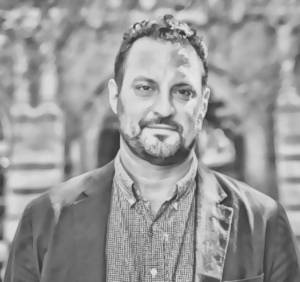
Jonathan Lincoln
Professor of the Practice and Director of the Center for Jewish Civilization at Georgetown University’s School of Foreign Service
The past two years have underscored the existential nature of the U.S.–Israeli alliance for Israel. Crucially, U.S. support has continued despite Israel’s growing isolation and increasing domestic and international condemnation over its conduct of the war in Gaza, including accusations of war crimes. In addition to such stalwart political backing, Israel’s reliance on the United States is also deepening on the ground. For example, nearly all of Israel’s recent strategic gains against Iran and its proxies in Lebanon and Syria will require consolidation by U.S.-led political efforts to ensure they remain intact. The United States and regional partners are now seeking an urgent end to the war in Gaza, including an eventual “political horizon” for Israelis and Palestinians that will require significant political concessions from all sides. As President Donald Trump proceeds with his peace plan, this new reality offers him a degree of leverage over Israel that eluded his predecessors.

Zaha Hassan
Senior Fellow in the Middle East Program at the Carnegie Endowment for International Peace
While Oct. 7 and its aftermath created new energy among Middle Eastern states in pursuit of a political solution between Israelis and Palestinians, key regional actors have been careful to avoid aggravating Washington. While Saudi Arabia, Jordan, and Egypt have decried the genocide in Gaza, none of these states has joined the Hague Group to impose costs and consequences on Israel, nor have they followed Turkey in joining the case brought by South Africa against Israel under the Genocide Convention. And while Saudi Arabia is co-chair of the High-level International Conference to implement the two-state solution, the New York Declaration that called for states to take measures to support Palestinian self-determination did not result in Arab- or Muslim-majority countries announcing intentions to downgrade ties with Israel. Israel’s attack on Qatar did more to mobilize recent efforts by these countries. Gone is talk of regional integration; the concern is with the rise of a new regional hegemon — Israel.

Yaël Mizrahi-Arnaud
Fellow at The Century Foundation
Trump’s 20-point plan represents the most detailed proposal yet for ending the war. It prevents forcible displacement of Palestinians and Israeli annexation of Gaza, while enabling a hostage exchange, humanitarian access, and the creation of an International Stabilization Force. For Israel, the plan’s most troubling elements are a potential pathway to Palestinian statehood and the timeline for full Israeli withdrawal. For Hamas, the key concerns center on its role in the post-war governance structure and specific terms of demilitarization.
The plan lacks enforcement mechanisms, withdrawal timelines, and verification maps. These gaps give Israel political flexibility, allowing its forces to remain in most of Gaza and resume military operations when convenient. The plan fails to guarantee Palestinian freedom of movement throughout Gaza or ensure unconditional humanitarian access, while imposing external governance that has broad powers over Gaza’s economy, security, and reconstruction, without Palestinian consultation. Without enforceable mechanisms, the plan risks providing international legitimation of permanent Israeli control.
Image: Rawanmurad2025 via Wikimedia Commons