Join War on the Rocks and gain access to content trusted by policymakers, military leaders, and strategic thinkers worldwide.

A little over a year ago, thousands of Yazidi refugees huddled at the top of Mount Sinjar in northern Iraq. They faced extermination at the hands of the Islamic State, or ISIL, and their plight was grave enough to trigger the United States to launch a humanitarian rescue mission to deliver food and protect the refugees. The United States military started dropping food to the refugees on August 7 and on August 8 started dropping bombs on Islamic State fighters.
August 2014 was a watershed month in the battle against ISIL. It represented the moment that ISIL burst into American national consciousness. It was also the month that ISIL first beheaded American captives, and the month that the group reached its greatest territorial expansion as its forces invaded parts of Iraqi Kurdistan and appeared to threaten Baghdad.
This anniversary is an opportunity to take stock of where the war against ISIL stands and try to evaluate whether ISIL is winning or losing in its grisly war. This requires a look at tangible measures of military strength like territory controlled, men under arms, and finances. It also requires looking beyond ISIL’s material strength to assess whether ISIL is achieving its strategic goals.
Territory
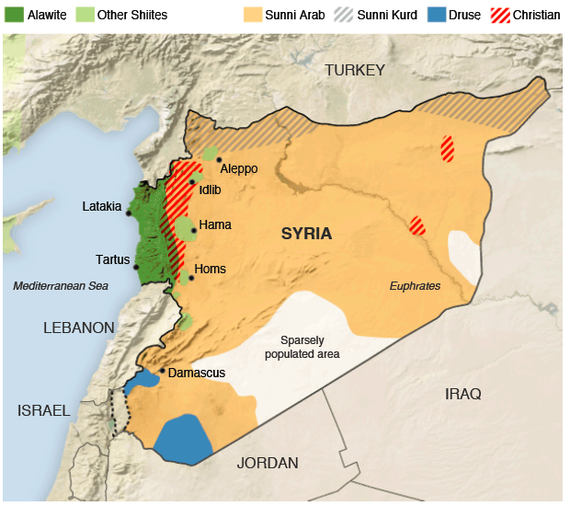
ISIL has lost territory since its peak expansion in August 2014, including the loss of 9 percent of its territory since January of this year. That ISIL appears to have lost ground in the face of American airstrikes has been taken by some commentators as a sign that the air campaign is succeeding. But matters are not so straightforward. It is also essential to ask precisely what territory ISIL has lost and what those specific losses say about its relative strength. This map released by the Pentagon in April of this year shows the losses suffered by ISIL between August 2014 and April 2015. It shows that ISIL lost nearly all the gains it made over the summer of 2014 in Kurdistan and has also given back its encroachments towards Baghdad. A second map, showing changes in ISIL’s territory from January to the present, shows additional ISIL losses near Ramadi (though they still hold the city of Ramadi itself) and along the Turkish border around Kobane. It also shows a major gain for ISIL in central Syria around ancient Palmyra. Taken together, these maps show four major areas of territorial change: ISIL losses near Baghdad, in the Kurdish areas of Iraq, and along the Turkish border with Syria, and ISIL gains in and around Palmyra. A clear patterns explains these changes: ISIL has been able to thrive in areas with a majority Arab Sunni population but has failed to take hold in areas where Sunni Arabs are the minority or where effective rival ground forces could oppose them.
In northern Iraq and Syria, ISIL was pushed back by Kurdish militias who were highly motivated and had the advantage of fighting on their home turf. The only part of northern Iraq that ISIL has been able to hold onto is Mosul — which has a mixed population with many Sunni Arab residents. Many of Mosul’s non-Sunnis were expelled from the city by ISIL, making the city easier for them to hold. ISIL was not able to take Baghdad or hold the areas around it because Iraq’s Shi’ite-dominated government was willing to pull out all the stops to defend their capital. Baghdad is also home to the largest Shi’ite population of any Iraqi city and Iranian-backed Shi’ite militias came to the Iraqi government’s rescue. ISIL’s advances into Kurdistan and its push towards Baghdad extended beyond the culminating point of attack and resulted in ISIL forces becoming overstretched. Similarly, ISIL’s losses along the Turkish border are in heavily Kurdish areas and came at the hands of Kurdish militias. The town of Kobane, for example, has a majority Kurdish population. Most of the hardest fighting was done by a Kurdish force called the People’s Protection Units. The presence of large numbers of Kurds organized into effective militias made these areas inhospitable to ISIL forces.
By contrast, in the area around Palmyra where ISIL has expanded the demographic setting was favorable. Central Syria is predominately Sunni Arab and lacks militant groups that can rival ISIL. Because ISIL troops can more easily live off the land in areas with predominately Sunni populations, this part of Syria provided more favorable conditions to the group.
Taken in this light, ISIL appears to have essentially traded holdings in Kurdistan and near Baghdad that were hard for it to maintain for holdings in central Syria that will be much easier for it to maintain. Losing these areas was more akin to a market correction than a bear market. The gains in and around Palmyra will probably be enduring.
Manpower
The question of ISIL’s manpower is a difficult one to assess because estimates vary widely on how many troops ISIL actually has. For this reason it is hard to say with certainty whether ISIL is fielding more troops today than they did a year ago. Last September the CIA thought ISIL had between 20,000 and 31,500 fighters. Last month, they estimated ISIL had almost the same number of fighters. The fact that ISIL’s manpower is roughly where it was a year ago is even more disconcerting when we account for the fact that CENTCOM claims it has killed 10,000 ISIL fighters. If this number is even close to being accurate it suggests that ISIL has no trouble replacing losses that would devastate a less resilient fighting force.
Unfortunately, even the CIA and CENTCOM’s pessimistic estimates of ISIL’s strength probably underestimate ISIL’s manpower by a significant margin. It now seems many intelligence analysts inside CENTCOM itself don’t believe CENTCOM’s estimates. A Department of Defense Inspector General’s investigation is rumored to be now underway to look into whether senior leaders have pressured analysts to change their estimates to provide a more positive picture of how much progress the U.S.-led air campaign is making. According to these reports, analysts from the Defense Intelligence Agency assigned to work at CENTCOM headquarters in Tampa were pressured to alter their assessments to conform to the views of senior policymakers. This meant the Defense Department’s own analysts, who believe the campaign is not going well, were prevented from giving military leaders information they didn’t want to hear or that contradicted the overly optimistic public presentation of how well the fight is going. Even if it is true that no malfeasance is found (and there is good reason to think that any differences of opinion between intelligence analysts and military commanders are the result of a good faith disagreement as to ISIL’s strength) events will probably still end up revealing that CENTCOM’s optimistic public pronouncements are wrong and the DIA analysts’ more pessimistic views are right.
Independent observers have been skeptical about CENTCOM’s estimates for some time. In August 2014, when the CIA said their high end estimate for ISIL’s strength was 31,500, the Syrian Observatory for Human Rights estimated ISIL actually had 50,000 men. Iraqi security expert Hisham al-Hashimi estimated ISIL had 100,000 fighters.
The actual number of ISIL fighters is probably closer to the higher figures of independent analysts than the CIA’s more optimistic numbers. As Daveed Gartenstein-Ross explained in February, ISIL controls a territory with about 4 million inhabitants. A mere 30,000 fighters could not hold all this territory and launch the kind of offensives ISIL was pursuing. He concluded after crunching the numbers that the actual ISIL force had to be closer to 100,000 than the CIA’s estimate of 30,000. The numbers could be even higher if you include the local militias allied with ISIL who help it maintain security in its core territories.
The divergent estimates complicates the task of analyzing whether ISIL is getting stronger or weaker. The CIA’s methodology has the advantage of being consistent over the entire period of time being measured. Other estimates may be more accurate but they don’t track change over time. Analysts may disagree with the CIA as to how many fighters ISIL has but there doesn’t appear to be any disagreement that ISIL’s forces are about as numerous as they were a year ago. Probably the most accurate statement that can be made is that a year ago, ISIL had a well-organized, well-motivated force with enough troops to hold their core territory and to launch offensives when the opportunity arose. That is still true today.
ISIL’s Strategic Objectives
The objective measures of ISIL’s strength — things like territory and manpower — suggest a stalemate in Iraq and Syria. The group has enough manpower to continue its war and while it has lost some marginal territory it has held all of its core territories and even expanded its holdings in Syria. However, whether an army wins or loses a war is about more than these numerical measures of military power. What matters most is whether a military force is achieving its strategic objectives. In the case of ISIL, its ultimate strategic goal is maximalist: ISIL seeks to establish a Caliphate that will ultimately bring all Muslims under its rule. Obviously, it is far away from achieving this long-term objective. ISIL is, however, achieving many of its short-term strategic objectives.
ISIL is winning its war even if it is only in a military stalemate in Iraq and Syria. Around the world, radical Islamist terror groups are increasingly aligning with ISIL. Nigeria’s Boko Haram and Somalia’s Al Shabaab have reportedly aligned themselves more closely with ISIL in recent months. This is significant not only because it shows ISIL has risen to a prominent leadership position in the global jihadist movement but also because it suggest ISIL may be eclipsing al Qaeda in that role. ISIL now has a presence in Libya, Egypt, Afghanistan, Yemen, and Lebanon. ISIL isn’t close to having a global Caliphate but it does have an increasingly disruptive presence in a growing number of places. In this sense, it is having a great deal of strategic success.
However, ISIL is achieving an objective that might be even more important: It is looking and acting like an actual state. It wants to make the law, to set up religious courts, levy taxes, and conscript soldiers from among their subjects. It wants to impose a new kind of order. For over a year now it has been succeeding.
A Long, Hard Slog
The fact that ISIL is succeeding in growing its global presence and in holding and governing its core territories shows that it is achieving its two most important near-term strategic objectives. ISIL’s material strength — as measured in manpower, money, and territory — has not been substantially reduced by a year of American airstrikes. America’s allies on the ground are struggling to retake key Iraqi cities like Ramadi and Mosul.
ISIL has proven itself a tough and resilient opponent, and the hard truth is that ISIL is still winning its war after a yearlong effort by the United States to degrade it. Given the meager progress resulting from the last year it does not seem that airstrikes alone will be enough. Defeating ISIL will require a more aggressive campaign than the United States has so far been willing to wage. This campaign will probably last for years and will require a more prominent role for American boots on the ground, with all the risks and costs that go along with putting soldiers in harms way. America’s current war in Iraq looks, like its last war in Iraq was, to be a long, hard slog.
John Ford is a reserve Captain in the United States Army’s Judge Advocate General (JAG) Corps and a graduate of Chapman University’s Fowler School of Law. He has written for The Diplomat Magazine and The National Interest. You can follow him on twitter @johndouglasford.