Join War on the Rocks and gain access to content trusted by policymakers, military leaders, and strategic thinkers worldwide.

Americans want desperately for Iraq to be viewed as another Vietnam. On its face, this may seem a highly counterintuitive proposition. Why, one might ask, would a nation that lost more than 58,000 of its young men and women during a failed war in Southeast Asia desire a repeat performance in the Middle East? Surely the Vietnam War left little in its wake for Americans to celebrate. Their army was left with its organizational confidence shaken, their trust in government was badly shattered, and their conviction in the nation’s capacity to intervene in the global arena put into question. A Vietnam “syndrome”—a reluctance to commit American power abroad, especially in conflicts deemed “unwinnable”—endured for at least three decades after the fall of Saigon in 1975.
Yet, despite the many tragedies of the Vietnam War, there has been a seemingly inescapable urge to see the current unraveling in Iraq through the lens of what used to be America’s longest war. Those seeing evident comparisons between the two conflicts appear intent on promoting a certain, if not simplified, version of an immensely complicated affair within the larger Cold War era. Vietnam ostensibly offers proof of a war won by military ingenuity, then ham-fistedly lost by political infirmity. Weak American political leaders not only turned their back on a beleaguered ally in the fight against global communism but, more shamefully, on their own soldiers who sacrificed so much for so little of permanence.
Thus, pundits like Max Boot can argue with reputed historical certainty in The Weekly Standard that “the pullout from Iraq looks increasingly like the pullout from Vietnam a generation before.” According to this narrative, President Obama took a page from Henry Kissinger’s diplomatic playbook, caring only for a “decent interval” before the next election cycle, and ceded the hard-fought gains made by American soldiers and marines who had implemented effective counterinsurgency principles under the learned eye of General David Petraeus.
Not only self-styled authorities on the Vietnam War but also some veterans of Iraq take a similar view. Petraeus’s former executive officer, Peter Mansoor, has followed Boot’s lead in critiquing the interference, if not misinformed micromanagement, of civilian political leaders in Iraq. In June, Mansoor told The Washington Post’s Greg Jaffe that “Anyone who was there during the surge came away very encouraged about the future of the country if we had continued to stay engaged.”
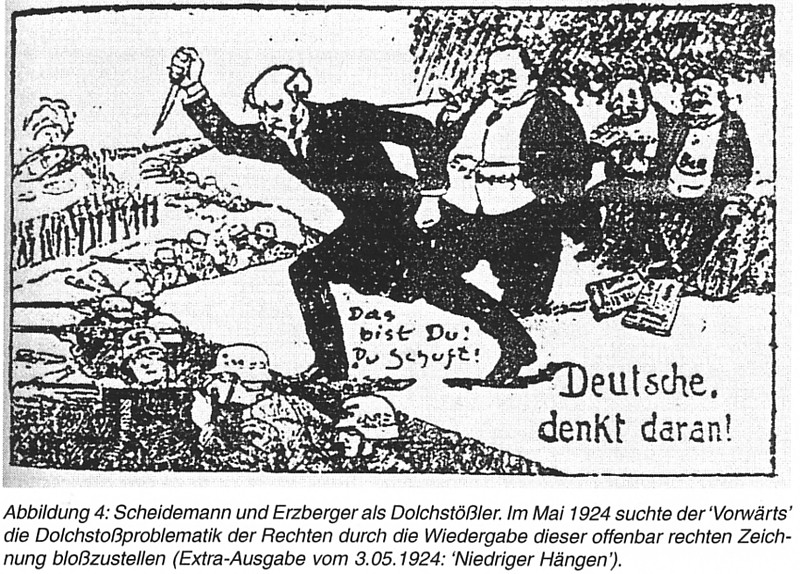
This repackaging of a new American dolchstoss (stab-in-the-back) theory should not surprise. In the immediate aftermath of Vietnam, U.S. officers were quick to blame their civilian masters for the fall of Saigon. Admiral U.S. Grant Sharp, Commander in Chief Pacific during the Johnson years, railed against Congress for its 1974 “assault on what was left of our support for South Vietnam by cutting funds for the procurement of military supplies for that beleaguered country.” Speaking to a U.S. Army Command and Staff College class in 1978, General William C. Westmoreland, himself the target of accusations for a botched war, took aim at civilian mismanagement. “Despite military advice to the contrary,” Westmoreland lamented, “our political leaders decreased the pressure on the Hanoi regime and enticed the enemy to the conference table.” If only allowed to see it through, the argument went, military officers could have led South Vietnam to final victory.
At least a sizeable minority of Vietnam veterans have embraced such counterfactual “if only” arguments. For instance, in his recent book Losing Vietnam: How America Abandoned Southeast Asia, retired Major General Ira H. Hunt bemoans how the “American sacrifice of lives and treasure had been in vain. Had the United States continued to adequately support its allies, though, it would not have needed to end this way.” For Hunt, and similarly minded veterans and historians, the war in Vietnam was not only “winnable” but “won.” Accordingly, in A Better War, Lewis Sorley could trumpet that under the leadership of Creighton Abrams “There came a time when the war was won. The fighting wasn’t over but the war was won.” (Discerning readers might examine Sorley’s endnotes for the chapter titled “Victory” to evaluate the evidence for such a bold claim.) In this accounting, military managers had solved the riddle of Vietnam. Civilian political leaders and the public at large simply had to see the war through to its logical conclusion. The tragedy lies in their failure of commitment.
It is this version of the Vietnam War, the one in which victory was squandered, that at least some American foreign policy specialists find so attractive. Vietnam is the perfect historical comparison to Iraq, and what better way to make an argument than to find corroboration from a historical case study? The problem, of course, is that historical parallels are never so neatly drawn. The lines are always askance, in large part because context matters. In short, the Vietnam of revisionist interpretations is not the one that Americans truly left behind in 1973.
If Sorley is correct that the war was won in 1970, one might ask why Abrams’s own staff did not see it that way. Clearly, Americans struggled throughout their time in Southeast Asia to accurately assess the progress and effectiveness of allied efforts. Yet in mid-1970, the U.S. military command found that the “enemy still retains a viable military and political apparatus throughout the Republic [of South Vietnam].” Even if allied efforts were “causing a gradual erosion of this capability,” especially in the aftermath of the 1968 Tet Offensive, Abrams’s staff was still debating whether pacification programs were maintaining momentum, whether local South Vietnamese forces were effective in providing population security, and whether the morale of province and district chiefs could be sustained.
While Americans pondered the efficacy of the allied effort, the civil war in which they had inserted themselves played out along lines too often outside U.S. influence. In fact, accounts of the conflict based on South Vietnamese sources confront the notion of American successes, especially within the political realm. In his masterful work The Vietnamese War, David Elliott convincingly demonstrates the Saigon government’s inability to consolidate a solid political base in the populous Mekong delta. Even if enthusiasm for the revolution was declining after 1970, such a phenomenon “did not lead to a corresponding increase of support” for the government of South Vietnam (GVN). Eric Bergerud’s attentive study of Hau Nghia province equally disputes claims supporting a U.S. military victory. Of the period between 1971 and 1973, Bergerud argues that the “GVN held the villages and controlled the roads, but the [National Liberation] Front apparatus was intact, and enemy main force units threatened attack from the safe areas and Cambodia.” (Indeed, the allies’ 1970 incursion into Cambodia attempted to dislocate these enemy sanctuaries with only short-term and limited results.)
Moreover, the very constancy of the GVN and its armed forces remained in question, despite years of American advice and assistance. In Village at War, another work based on Vietnamese voices, James Trullinger found not only a corrupt local police force and government in My Thuy Phuong but maintained that the 1973 “cease-fire agreement has succeeded in only one respect: getting U.S. troops out of Vietnam.” This compared to the 150,000 North Vietnamese Army troops allowed to remain inside South Vietnam’s borders by the Paris Accords. In reality, the best that American forces had been able to achieve, whether under William Westmoreland or Creighton Abrams, was a costly stalemate. After nearly two decades of direct American involvement, only the Vietnamese could resolve the deep political and social differences around which their civil war revolved.
This is not to contend that American political decisions had no impact on the course of the Vietnam War. Clearly they did. Lyndon Johnson’s choices to commit U.S. ground combat troops and then limit their actions within the borders of South Vietnam most definitely altered the Hanoi Politburo’s war plans. The theory of gradual escalation as it applied to the coercive American air campaign over North Vietnam ultimately proved invalid. Richard Nixon’s effort to “de-Americanize” the war surely transformed the direction, if not outcome, of a long political-military conflict. None of these decisions, however, prove Vietnam was a war won militarily yet lost politically. Nothing about one of the most complex American interventions abroad in the twentieth century should be deemed so simple.
In fact, the Vietnam War longed for by those seeing neat parallels with Iraq quite simply does not exist. Surely, historian Heather Stuhr is correct in arguing that we should stop comparing Iraq to Vietnam. The comparisons have become little more than a rhetorical device to prove (usually) a political talking point about interventionism, commitment to one’s allies, or the limits of American power abroad. But there is something deeper at play here. The curious nostalgia for Vietnam is based not only on a misinterpretation of that war but, more broadly, of war in general. War is not a human activity that can be precisely—and conveniently—divided between military and political components. Military action should never be seen as an end unto itself. One might even argue that attempting to separate the military from the political is dangerous business.
Soldiers coming home from wars with uncertain ends should not be persuaded to blame civilian politicians for betraying their sacrifices. (Many French officers did so both during and after the long war for Algerian independence, with unfortunate results.) If there is any perspective to be gained from Vietnam, it is not to be found in reductive accusations of political infidelity. Rather, to borrow from Eliot Cohen, it may be more productive to look at conflict as a constant dialogue between civilian policymakers and their wartime subordinates. That dialogue should focus on what military force can achieve politically, how strategies are best employed, and what state of peace follows in the aftermath of man’s most destructive act. None of these aspects of war are the special preserve of either political or military leaders. War has long been about political-military interaction. Vietnam was no exception. Neither was our intervention into Iraq. Perhaps it’s time to stop longing for the two to be any more similar than that.
Gregory A. Daddis is an Academy Professor in the Department of History at West Point. His latest book is Westmoreland’s War: Reassessing American Strategy in Vietnam (Oxford University Press). The views expressed here are those of the author and do not reflect the official policy or position of the Department of the Army, the Department of Defense, or the U.S. Government.
Image Credit: U.S. Archives