Join War on the Rocks and gain access to content trusted by policymakers, military leaders, and strategic thinkers worldwide.
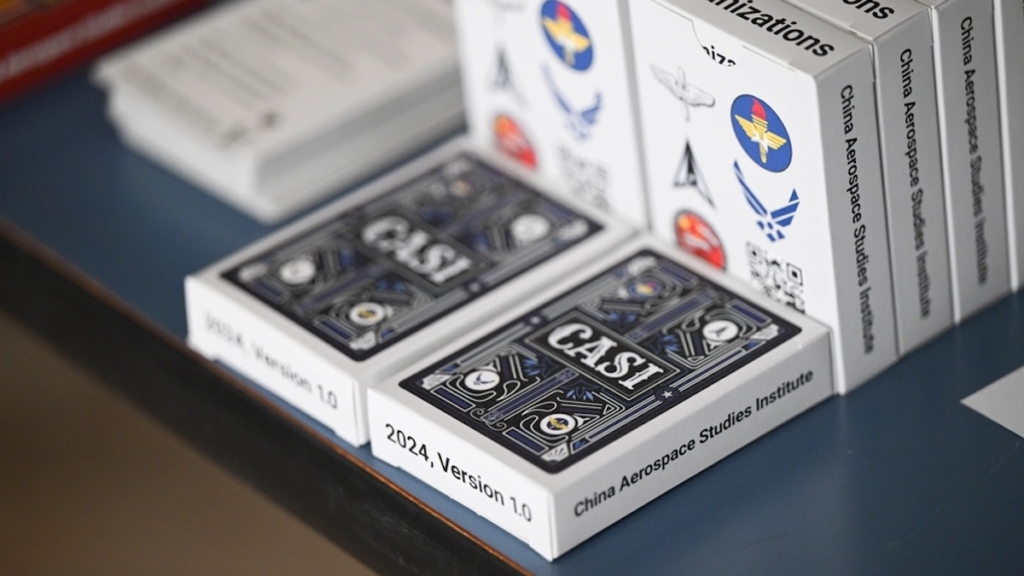
On Oct. 1, 2026, Beijing celebrated the 77th anniversary of the founding of the People’s Republic of China and the beginning of the end for the U.S. Air University’s China Aerospace Studies Institute. The institute was one of several centers of excellence established across the U.S. military’s professional military education programs, with the Army, Navy, and Air Force each running a center focused on its own service’s needs. The China Aerospace Studies Institute, however, was more than just a U.S. Air Force and Space Force research center that provided open-source insights on their Chinese counterparts. The in-house analysts and the researchers they sponsored formed a critical node in our understanding of Chinese military power. Losing the China Aerospace Studies Institute will mean losing foundational knowledge of America’s most dangerous adversary at a time when we can ill afford a lack of understanding.
The U.S. Air Force created the China Aerospace Studies Institute nearly a decade ago to track Chinese aerospace developments through open sources, both in terms of military power and the civilian industrial capacity underpinning it. Through the institute’s contracts and conferences, the China Aerospace Studies Institute also nurtured a larger community of interest, educated U.S. military officers, and supported ongoing Department of Defense efforts to understand the adversary. Many of the published translations and analyses, such as those on military-civil fusion, were important to a much wider audience than the U.S. Air Force. Its “In Their Own Words” series put key doctrinal texts of the People’s Liberation Army into English, including both the 2013 and 2020 editions of the Science of Military Strategy, the Science of Campaigns, and, this March, the Science of Second Artillery Campaigns. These studies represent some of the best analytic work done inside and outside government, regardless of classification. Now Air University will make the “surplus” and eventually phase them out.
The Air Force insists otherwise. Officially, the institute’s “mission continues,” carried on by “assigned military service members.” The staffing chart says differently. Those military billets amount to two master sergeants and a deputy position that has sat empty for more than a year. As the institute’s director, Brendan Mulvaney, put it, “All of the research has always been done by the civilian personnel.” The institute’s own notice, since pulled from its website, dispensed with euphemism: Air University “has decided to close” the China Aerospace Studies Institute, and once the civilians leave, it “will close.” The gap between the two accounts speaks for itself.
What we are giving up is not small. In 2025 alone, the institute’s website drew nearly 80,000 visitors who downloaded more than 50,000 reports. The institute mailed more than 1,200 printed reports, handed out another 1,000 at the Air & Space Forces Association’s annual conference, and distributed more than 10,000 decks of its “PLA-ying cards.” Units had booked its traveling People’s Liberation Army Fundamentals course through mid-2026, and more than 250 people attended its conference this May. All of it rested on a civilian staff of 10.
Nor was the cut a judgment on the institute’s work. By Mulvaney’s account, it “had nothing to do with [the institute’s] mission.” The China Aerospace Studies Institute produces no professional military education students, whereas teaching them is Air University’s primary mission. By that logic, a research center is expendable because it is not a school. The Army War College’s China Landpower Studies Center, the Marine Corps War College’s China Warfighting Initiative, and the Navy’s institute in Newport all remain intact. The air, space, and missile forces of the People’s Liberation Army, the institute’s core portfolio, will no longer have a dedicated home anywhere in the U.S. military’s education system.
Some would dismiss the loss. They would say that Air University faces real budget pressure and had to find savings somewhere, and that the Center for Strategic and International Studies, the RAND Corporation, university centers, and the Jamestown Foundation — which one of us leads and where the other is a fellow — already produce open-source research on China in volume. We do this work ourselves, and we know that outside research cannot fill the gap. Outside institutions do not translate the People’s Liberation Army’s doctrinal texts at this scale, and they do not teach units across the force. Nor can an outside organization duplicate the China Aerospace Studies Institute’s proximity to the U.S. Air Force and trustworthiness that comes from being inside the system. Moreover, outside organizations are rarely compensated adequately for the actual costs supporting government and military institutions, unless they are a part of a cumbersome contract.

Even today, some national security officials would dismiss the loss on the grounds that classified work is more important — the kind of work only national security agencies can perform. Open source is redundant, they would say. The key people who need to know would know. And that would be enough. Democracies, however, do not work that way. Nor does that view consider the realities of what a war might bring.
The rivalry with China engages nearly every sector of American society. It is not simply a problem for the government to resolve. Corporate boardrooms and investors face the reality of Beijing’s predatory economic policies and have to grapple more with geopolitical risk. American universities and companies need to understand research partners, and U.S. government desk officers seek information on more Chinese companies, individuals, and policies than the intelligence community can possibly collect and process. Nor will any White House declassify intelligence on the scale and frequency that would be necessary to support these decisions. The China Aerospace Studies Institute has built authoritative knowledge relevant to those questions, including reports such as the 2020 study on China’s Military-Civil Fusion Strategy.
For the U.S. military, specifically, a war with China would engage the whole of the armed forces and draw deployments toward the Western Pacific. These are soldiers and sailors who, today, do not have a need to know about an adversary outside their current theater and deployment. If and when war comes, it will already be too late. Their commands will push forward the intelligence they need to fight, but not the baseline familiarity with the People’s Liberation Army that takes time to build, which the institute’s courses and publications supplied.
Open-source information and analysis can be shared freely among citizens and allies, making it irreplaceable as a resource for persuading and mobilizing. Citizens should be able to verify claims made by leaders — to understand national security challenges themselves. Citizens, as with allies and partners, require a common understanding.
The headlines rarely answer some of the China questions that affect everyday life. Why is the Federal Communications Commission cracking down on Chinese drones? Open-source researchers have provided answers. The institute’s surveys of Chinese drone-swarm inventions and of China’s military drone industry are part of the explanation.
For all of the resources of the intelligence community, U.S. government officials also require more open source. Exquisite collection systems and clandestine human intelligence are like looking through a microscope. China is too vast to see so narrowly. The Chinese Communist Party has more than 100 million members, ruling a country larger than the continental United States, with bureaucratic rhythms and politicking that can cue analysts to future developments. Analysts have to see the forest before they can truly appreciate the trees.
That is what open source brings: familiarity with the rhythms of a system, of what is normal and routine. The China Aerospace Studies Institute provided that service tailored toward the needs of the U.S. Air Force.
Beijing itself prizes open-source research. In 2023, Recorded Future documented the People’s Liberation Army increasingly buying open-source research from private Chinese companies, including on the U.S. military and Taiwan. Beijing pays contractors to read what America publishes about itself. The Air Force is letting go of the institute that reads what China publishes. More importantly, the People’s Liberation Army and the intelligence services have maintained a significant number of institutes that focus on open-source collection and analysis, including the Ministry of State Security’s bureau publicly known as the China Institutes of Contemporary International Relations, founded in 1980, or the Military Intelligence Bureau’s China Institute for International and Strategic Studies, founded in 1979.
Chinese commentators also do not doubt the institute’s value. Within hours of the first reports, an editor at Guancha, a state-aligned news site, mocked the institute that “understands the People’s Liberation Army best in the observable universe,” and a blogger with more than a million followers on the Chinese social media platform Weibo spread the taunt. Guancha followed with a detailed report, and a talk show hosted by its chief military editor titled an episode, “The U.S. Military’s ‘China Hands’ Think Tank Is Finished. We Miss It, Hahaha.” No one gloats over the loss of an institution that never mattered.
Cruder voices supplied a motive. At least three self-media posts ran under the same headline, “America’s Top Think Tank Collapses for an Absurd Reason,” and cast the closure as punishment for belittling the J-20 stealth fighter and misleading the U.S. military. The story is invented but revealing: Its authors cannot imagine a great power discarding its China research to satisfy a staffing formula. The more thoughtful drew the obvious conclusion. A military blogger with nearly two million followers observed that far less public research on China would now appear, and that frontline U.S. Air Force squadrons would receive less guidance on their adversary.
The China Aerospace Studies Institute will linger in a kind of half-life and may yet recover. Hopefully, it will regain its budget and billets before its expertise scatters. 10 civilian billets are a rounding error in the Air Force budget. Restoring them requires only that someone with the power of the purse decides the mission matters. We need more of these institutes, not fewer, and more institutional support to sustain open-source analysis of America’s greatest rival. With one fewer, the role of places like the China Maritime Studies Institute at the U.S. Naval War College and publications like Jamestown’s China Brief become all the more important.
Peter Mattis is president of the Jamestown Foundation and a former staff director of the Congressional-Executive Commission on China.
Christopher Nye is a pseudonym for a non-resident fellow at the Jamestown Foundation, where he specializes in Chinese Communist Party elite politics and the institutional dynamics of the Chinese military.
**Please note, as a matter of house style, War on the Rocks will not use a different name for the U.S. Department of Defense until and unless the name is changed by statute by the U.S. Congress.
Image: Senior Airman Gianluca Ciccopiedi via DVIDS