Join War on the Rocks and gain access to content trusted by policymakers, military leaders, and strategic thinkers worldwide.
“We want to stop the North Koreans as far from Pusan as we can. Block the main road as far north as possible. Contact General Church. If you can’t locate him, go to Taejon and beyond if you can. Sorry I can’t give you more information. That’s all I’ve got. Good luck to you, and God bless you and your men.”
-Maj. Gen. William F. Dean, orders to Lt. Col. Charles B. Smith, July 1, 1950, four days before Task Force Smith was overrun at Osan.
The battery I served in at Camp Casey, South Korea, the 333rd Field Artillery Target Acquisition Battery, existed to do one thing if North Korea attacked: find the enemy’s guns so our guns could fire back. That was the whole of our unit’s job.
I was a private first class and fire support specialist in that battery: the soldier who tells the guns where to shoot. On Nov. 23, 2010, news reached us that North Korea shelled an island called Yeonpyeong, somewhere to the west. That was about all I knew.
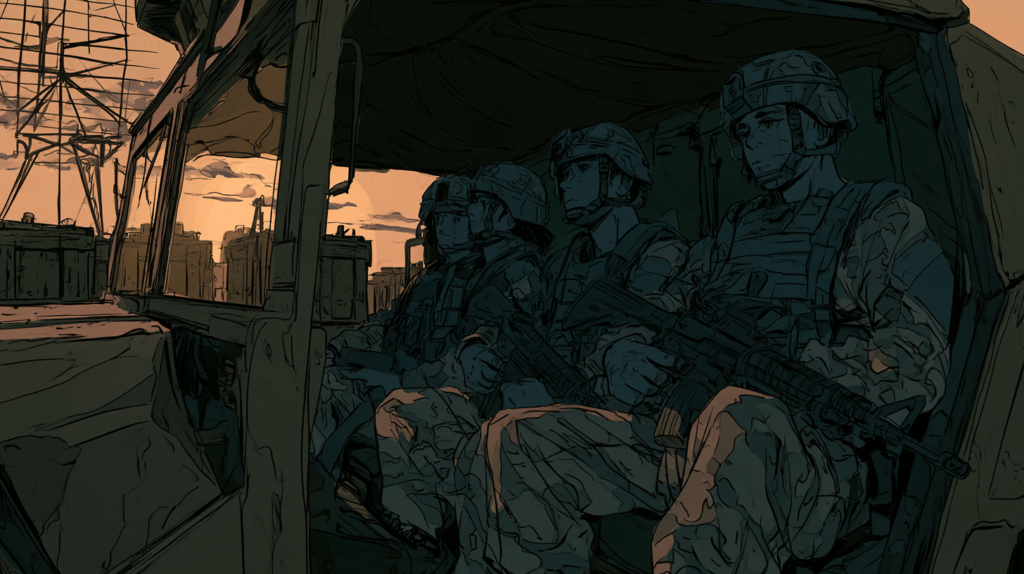
Our sergeant ordered us to put on armor, go to the armory, and draw live rounds. After drawing ammunition, my squad and I were directed to wait in our Humvee — a task even four junior enlisted men had no trouble executing with minimal direction. That, however, was where our direction ended.
No one in that vehicle knew what we were supposed to do next. Nothing in any of the exercises we had done up to that point, which were to prepare us for this exact moment, had given us a next move for that afternoon. So, we stayed where the day had put us: in the motor pool, in the Humvee, waiting.
16 years later, the exercises got shorter; Ulchi Freedom Shield, planned for 11 days, ended after only five, following U.S. President Donald Trump’s direction to his defense secretary in a social media post to “substantially reduce” exercises on the Korean Peninsula. The president gave four reasons: his relationship with North Korea’s leader Kim Jong Un, the cost, the “hostile” signal the exercises send, and Seoul’s refusal to join America’s military operation to denuclearize Iran. Readiness was not on the list.
Retired American and South Korean officers called the cut a blow to readiness, while the Pentagon assured that the move “preserve(s) essential readiness” and resulted in “no degradation to U.S. training objectives.” That assurance applied only to American training objectives — what constitutes “essential” readiness remains undefined. Neither claim can be checked because the readiness the critics invoke and the training objectives the Pentagon cites have never been publicly disclosed. The wider implications of the cut for the alliance are a separate question, but what Washington and Seoul ought to be asking at this juncture is far narrower: What are these exercises actually for?
The alliance has one public answer to that question, but it sits at the top of the chain. Both governments state openly that the command post exercise certifies whether a future combined command under a South Korean four-star can meet the conditions for taking wartime operational control — an assessment that was underway in this year’s exercise when the president halved it, with Seoul pressing for a transfer decision at October’s Security Consultative Meeting. South Korea’s defense minister, Ahn Gyu-back, told the National Assembly that the evaluation, including the counterfire portion, finished within the five days that it ran — analysts in Seoul counter that a halved exercise narrows the basis for judging the command Seoul proposes to lead. No outsider can score that dispute either — the communiqués state that “all assessment tasks met the criteria” without listing any tasks, naming any formation, or showing any criteria. The alliance certifies publicly and grades privately.
It is hard for me to say the exercises of 2010 produced “readiness.” What they produced, at my level, was a private in a motor pool with live rounds and no idea what to do. Perhaps I was too junior to see the plan; perhaps Private Hoffman was failing to meet the standard; or perhaps the exercises today produce something different — I cannot say, and neither can anything in the public record.
If these are rehearsals for war, the alliance can show it without declassifying a page: which units rehearse which wartime missions, in which exercise, graded by whom. The grades can stay classified, and so can the passing mark, but the syllabus cannot.
Exercise Team Spirit put 200,000 troops in the field at its peak and ended in 1993. The surviving line —Ulchi Focus Lens, then Ulchi Freedom Guardian, now Ulchi Freedom Shield — has been a command post exercise since 1976. Robert Collins, former chief of strategy for Combined Forces Command, described Key Resolve, Ulchi’s spring counterpart, as being intended to “train staff instead of field units.” Team Spirit trained the field, and its survivors train the command post. The exercise both sides are now arguing over is a staff exercise with field events attached.
In August 2010, the Ulchi Freedom Guardian I was in ran with 30,000 American and 56,000 South Korean participants — the Army called it the world’s largest annual command post exercise. My squad’s piece of it was in a bunker at Camp Red Cloud, where we ran 12-hour shifts watching terminals inside a theater-level wargame. Nothing in that week trained the task my squad existed to perform. I am not calling the week worthless, but it was a headquarters exercise doing headquarters training: Four junior enlisted combat arms soldiers were furniture in it. Collins’ view of the spring exercise came from the Chief of Strategy’s office, and my view in August looked the same from the bunker.
Ulchi Freedom Shield runs in two phases, defense and then counterattack — the president’s directive cut the counterattack phase, planned for Aug. 24 to 27. The field training scheduled alongside the command post exercise took its own cut: The allies halved those events from fourteen to seven, deferring the rest or converting them to simulations. This year’s exercise involved about 18,000 South Korean troops and an unspecified number of Americans. Defense Minister Ahn says 159 field training exercises remain on this year’s calendar. That the soldiers on the peninsula train at volume is not in question. What is in question is whether that volume trains them for the fight they would actually find themselves in.
At 2:34 p.m. on Nov. 23, 2010, the alliance came as close to that fight as it had been in 60 years when a North Korean multiple rocket launcher battery south of the village of Kaun-gol fired a barrage of 170 rounds onto Yeonpyeong Island. The island’s Firefinder counter-battery radar, the same model my battery fielded at Camp Casey, was down with an unknown fault. The fire control center could not locate the launchers. The South Korean Marine artillery crews, with most of their guns ready, executed pre-planned counter-battery fire: Only after the radar came back online could they find and engage the rocket battery. The attack killed two marines and two civilians.
Yeonpyeong lies about 125 kilometers west-southwest of Camp Casey. The battery that responded was South Korean by design: Peacetime operational control of South Korean forces returned to Seoul in December 1994. And the intended American response was to hold fire — which is what we did in that motor pool. But the fight was a counterfire fight, and my battery was built around the exact radar that went down on Yeonpyeong. Maybe we had a useful task that afternoon, or maybe we had none. That judgment lived echelons above me, and I cannot make it. But the confusion at my level wasn’t in the waiting. We knew our equipment and our basic combat tasks: Every field exercise we had run tested one or the other. What nothing had taught us was how we were intended to apply that training if North Korea attacked. Army doctrine has held since 1993 that a commander’s intent must be understood two echelons down, so that a unit can act when orders stop. That is the Army’s standard, and it is the only one I measure that afternoon against.
The obvious reply is that command post exercises never claimed to be for junior soldiers, so of course a private saw nothing of his job in them. But training the headquarters and training the field are not either-or, and the Army was proving it at the time in two wars at once. The National Training Center put whole brigades, squads to staffs, into one simulated fight, with every echelon evaluated against its mission-essential tasks. I went through it as a specialist, still junior enlisted, before Afghanistan, and left with a working idea of what was expected of me when orders ran out. The command posts got their training in the same rotation — nobody had to choose.
Readiness includes the warfighters expected to do the fighting knowing, at least in outline, what they will be asked to do. It also includes the taxpayers who fund the training, and the committees that oversee it, being able to learn what it is for. If a private’s wartime task in Korea is to wait for orders, fine. Then train soldiers to expect it and say so the next time someone defends an exercise as readiness. If standby is the design, it is fair to ask, before anyone mourns or celebrates this cut, why thousands of troops are counted as participants, how many of them are training their actual wartime tasks, and whether the format ever needed the scale both sides are fighting over.

Within weeks of the 2010 shelling, Seoul announced Firefinder radars for the border islands and, within a year, reinforced Yeonpyeong’s garrison. The American side replaced its Firefinders too. Every asset-level fix is documented, and anyone can check it.
The same cannot be said for training. Camp Casey’s own release says its ammunition-upload and alert drills are designed to “test the brigade’s ability to rapidly mobilize and deploy.” I went looking for the rest. The closest the public record comes is U.S. Forces Korea’s own exercise instruction, which states a grading system exists for seven mission-essential tasks and monthly readiness assessments. The seven tasks are not listed, nor does anything in the public record state what qualifies as “readiness.” Whether that means being prepared for a North Korean thrust across the Demilitarized Zone or, as in 2010, refreshing basic skills with no scenario attached, nothing in the open source can say. Descriptive material on the exercises is plentiful — press releases, hearings, and posture statements — what is lacking is any information about what these exercises actually measure below the headquarters.
Other theaters publish more. Pacific Command certifies the First Marine Expeditionary Force as a joint task force in print during Balikatan. Japan’s Joint Staff publishes a 10-item list of what its combined exercise with American forces will train. The Army even publishes its mission-essential task standards outright. Korea publishes the least: An instruction with no formation and no task attached. No exercise anywhere puts those pieces together — the formation, the task, and the standard it is judged against. Washington has spent nearly 50 years asking what its exercises accomplish. In 1979, congressional auditors found exercise objectives lacked “meaningful criteria against which to measure accomplishment.” In 2017, the Government Accountability Office conceded the return on exercises resists measurement and may take years to recognize. The alliance ran a version of this year’s experiment in 2018, when the Ulchi Freedom Guardian was suspended outright in favor of reshaped command post training. Gen. Robert Abrams, then the nominee to command U.S. Forces Korea, told the Senate there was “certainly degradation to the readiness of the force,” then called it “slight.” Secretary of Defense James Mattis kept slight the next day and added that there was “nothing significant to it.” Eight months later, in command, Abrams said combined training and readiness “haven’t slowed down one bit,” citing more than a hundred exercises run since January — a recovery possible only on paper, and only because the measure on offer was a count of exercises rather than anything measured in the field.
The Army learned the cost of that arithmetic in the Korean War. In July 1950, Gen. Dean directed Task Force Smith to blunt the North Korean thrust at Osan: Most of Col. Smith’s soldiers, like my squad 60 years later, were young and combat-inexperienced. Also like us, they had been rated ready by the Army’s evaluation. North Korean forces overran the unit in seven hours. Rated ready and ready are different standards. The Army has known this for 76 years.
I cannot say whether theater-specific training would have helped the soldiers of Task Force Smith, nor can I say if additional guidance would have saved lives. What I can say is that the threadbare orders Col. Smith received days before his soldiers were sent into combat mirror the level of awareness we had the day we were ordered to draw live rounds and wait.
Washington and Seoul, through the Security Consultative Meeting, should direct their joint chiefs’ Military Committee and the combined command to publish the syllabus: which formations own which wartime missions, which exercise trains each, and who certifies the result. The criteria and the grades can stay classified, but the soldier should get the rest of it, his own task in full, and none of that ever has to leave his unit. One may object that the theaters that publish more train at a distance from the adversary, while the alliance’s wartime missions begin inside North Korean artillery range, but both Washington and Seoul have already judged it safe to disclose mission ownership. The 210th Field Artillery Brigade, my former brigade in Korea, publicized its deep-strike mission on U.S. Army Pacific’s Facebook page last year. Seoul’s defense ministry identifies the Ground Operations Command’s counterfire headquarters as responsible for targeting the North’s long-range artillery. A staff officer may object that linking those missions to an exercise calendar would tell Pyongyang who rehearses what and when. Yet both governments already announce each exercise, as the U.S. Forces Korea spokesman put it this August, “to the entire world before it even starts.”
Congress, for its part, should attach a reporting requirement to the transfer of command itself. Before wartime operational control passes to a South Korean four-star, the commander of U.S. Forces Korea should report to the defense committees which wartime tasks the assessment measured, which exercises measured them, and how the command graded the result: The Comptroller General should review that report against the missions each formation would own under the new command, and keep reviewing it each year after, as it does now for the F-35. The yardstick already exists: U.S. Forces Korea wrote it into its own exercise instruction, and while the device is not perfect, Congress already uses it across domains. A member who believes the cut damaged readiness needs the review to prove it, and a member who believes the Pentagon’s no-degradation claim needs it just as much. So too does a member who wants the operational control transfer to happen on time — a certification no outsider can check is the easiest kind to hold up. That would close a loop opened in 1979, when the auditors asked for readiness measures built into the exercise program and the Pentagon answered that readiness could not be quantified. 47 years is a long enough wait to give it another try.
When I was stationed at Camp Casey, we jokingly called ourselves the speed bumps. Even at the lowest levels of the force, we understood that our role in a Korean contingency, much like Task Force Smith before us, was to sell our lives as expensively as possible to buy the rest of the force time. Every soldier in America’s Korean footprint knows they may be asked to do what the soldiers of 1950 were asked to do. If they are asked again, the Army should be able to give them more than Gen. Dean could give Col. Smith. That begins with training, with a published standard commanders are accountable to, and with the alliance answering what these exercises are actually for.
Alexei Hoffman is a research associate with the Aerospace Security Project at the Center for Strategic and International Studies. A former U.S. Army forward observer, he served in a counterfire target acquisition battery at Camp Casey, South Korea, during the 2010 Yeonpyeong crisis and later deployed to Afghanistan. He holds a master’s degree in Asian studies from Georgetown University’s Walsh School of Foreign Service and was named a 2024 Next Generation U.S.-ROK Leadership Fellow at the Wilson Center. His writing on Asian security topics has appeared in the U.S. Army’s Military Review, the Yale Journal of International Affairs, and Marine Corps University Press.
The views expressed are those of the author and do not reflect the official position of any organization the author is affiliated with, including the Center for Strategic and International Studies.
Image: Midjourney